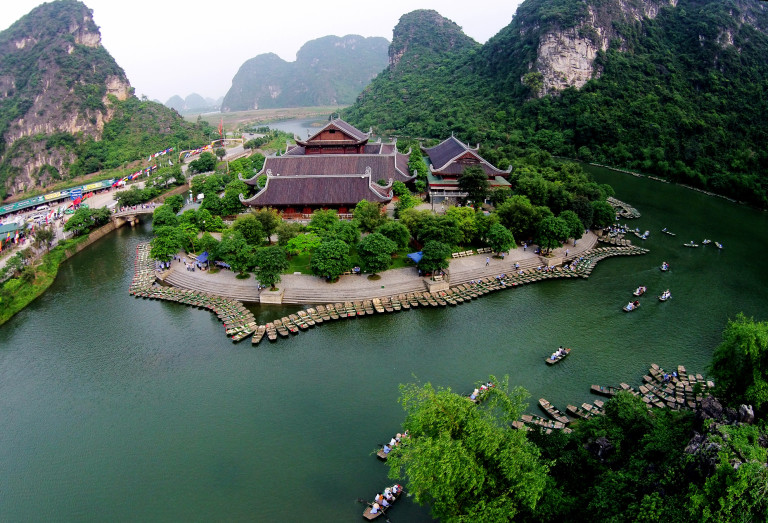
Trip to “Halong Bay on Land” in Northern Vietnam
“Crossing the caves and temples of Trang An lasts only a few hours, but it showcases nature’s masterpiece, where travelers will feel relaxed and comfortable…”
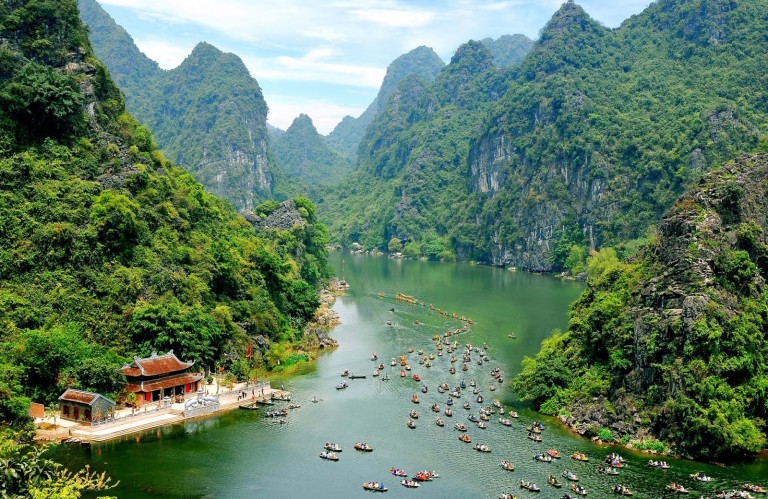
Situated on the southern bank of the Red River Delta, 90 kilometers from Hanoi, the province of Ninh Binh has an area of approximately 1,400 square kilometers with varied terrain. It is a spectacular landscape combining limestone peaks, valleys, forests, lakes, and plains, creating a unique ecosystem. In June 2014, the Trang An Landscape Complex became a UNESCO World Heritage site as a mixed natural and cultural property.
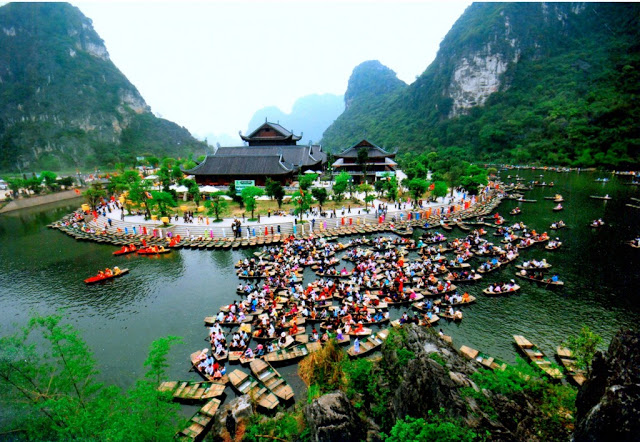
The Trang An Landscape Complex comprises 3 distinct areas: the ancient capital of Hoa Lu, the Trang An – Tam Coc – Bich Dong scenic landscape, and the Trang An special-use primary forest. Most of Trang An is uninhabited and is therefore free from negative impacts on the cultural and natural value of the Complex.
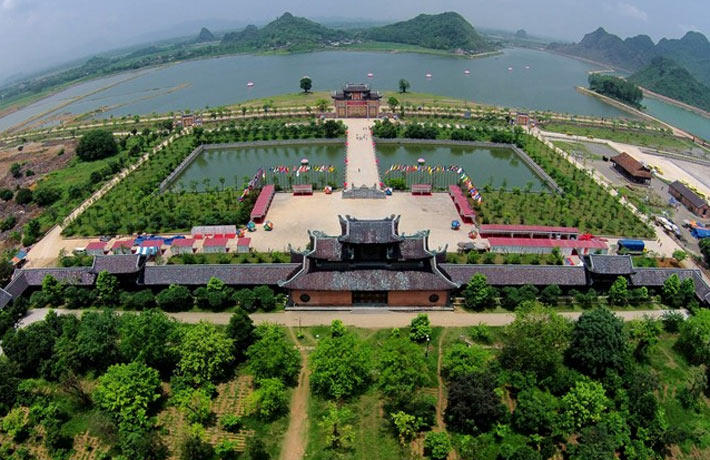
Bái Đính Pagoda
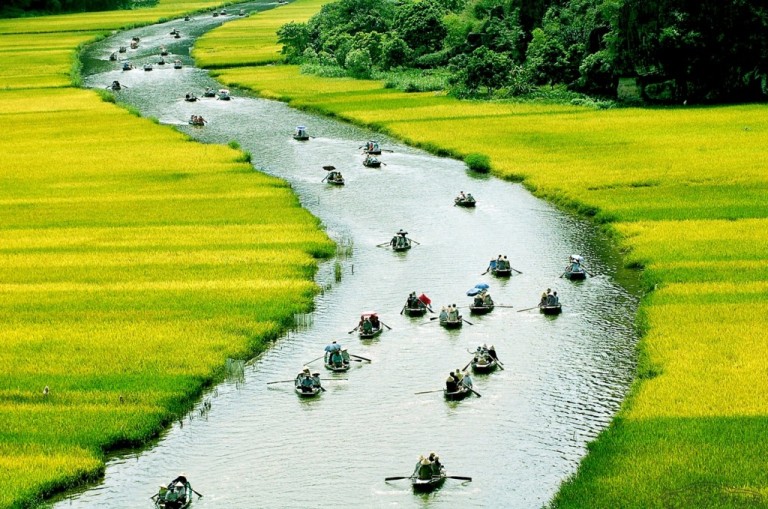
Ngo Dong River in Tam Coc – Bich Dong seen from above
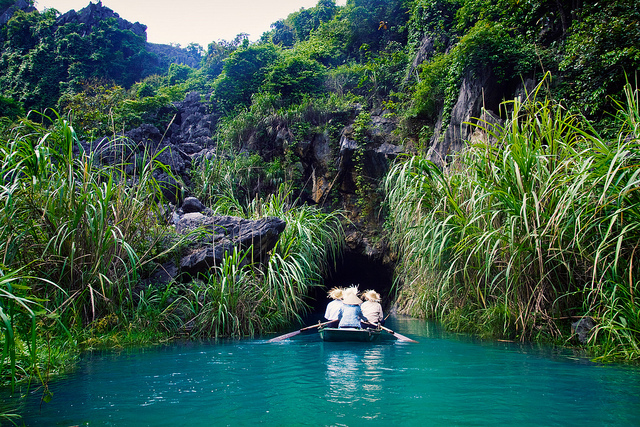

The limestone peaks of Trang An represent a tropical karst landscape in the final stage of geological evolution and hold global significance. Trang An consists of a typical karst topography, with many spectacular hills surrounded by valleys and wide marshes connected by a system of underground rivers. Exploration of some of the caves at higher altitudes scattered across the landscape has revealed archaeological traces of human activity dating back nearly 30,000 years. Many studies demonstrate that Trang An is a prominent chronicle of environmental change and human responses to climatic and environmental shifts.
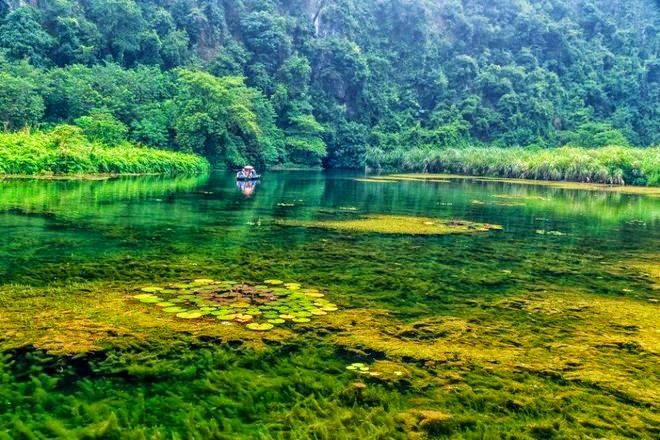
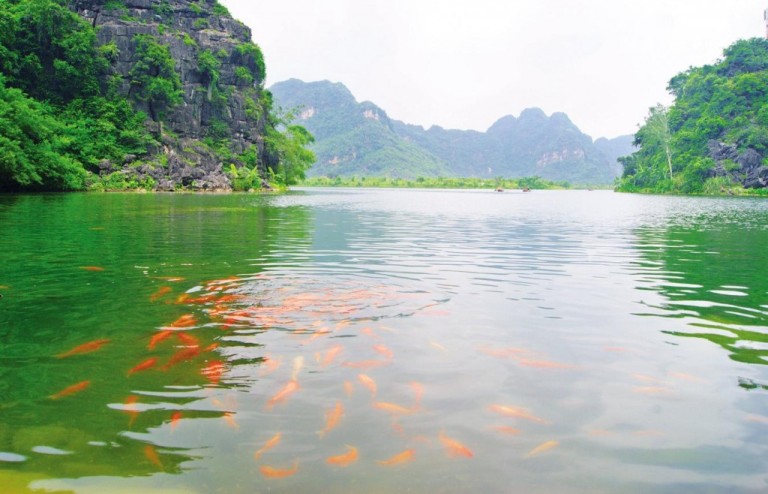
Due to these unique characteristics that cannot be confused with other landscapes in the world, UNESCO has recognized the outstanding universal value of the Trang An Landscape Complex based on 3 criteria: Criterion 5, “The Trang An Complex is a typical example of a traditional human settlement, traditional land use, or sea use, representing one (or more) cultures, or human interaction with the environment, especially when it becomes vulnerable under the impact of irreversible change”; Criterion 7, “Includes superlative natural phenomena or areas of exceptional natural beauty and aesthetic importance”; Criterion 8, “Is an outstanding example representing major stages of Earth’s history, including the record of life, significant ongoing geological processes, or exceptional geomorphic or physiographic features.”
The site also includes Hoa Lu, the ancient capital of Vietnam in the 10th and 11th centuries, as well as temples, pagodas, rice fields, villages, and sacred places.