


Off the Beaten Path Destinations for an Authentic Trip to Vietnam
14 sites and off-the-beaten-path destinations for an authentic trip to Vietnam
Looking for the authentic Vietnam? Curious to escape the well-organized trip and see another side of the country? Or perhaps you want to spread your tourist budget by supporting emerging destinations and small communities. Whatever your motivation, North Vietnam off the beaten path is no mystery. This article will inspire you to take a look at the hidden corners of the North for your next trip to Vietnam.
While iconic landmarks like Ninh Binh – Tam Coc, Sapa, and Halong Bay are all worth a first-time visit, on future trips you can visit beyond the main, less touristy spots. From emerging ecotourism towns and destinations to those often overlooked, here are 14 of our off-the-beaten-path destinations in Vietnam to put in your itinerary.
Are you looking to experience the “real” Vietnam? Go beyond Sapa with these 14 underrated, non-touristy destinations. Discover North Vietnam off the beaten path.
Dong Van Karst Plateau, Ha Giang
Almost isolated from the rest of the country until the 1970s, Ha Giang is often described as Vietnam’s “last frontier.”
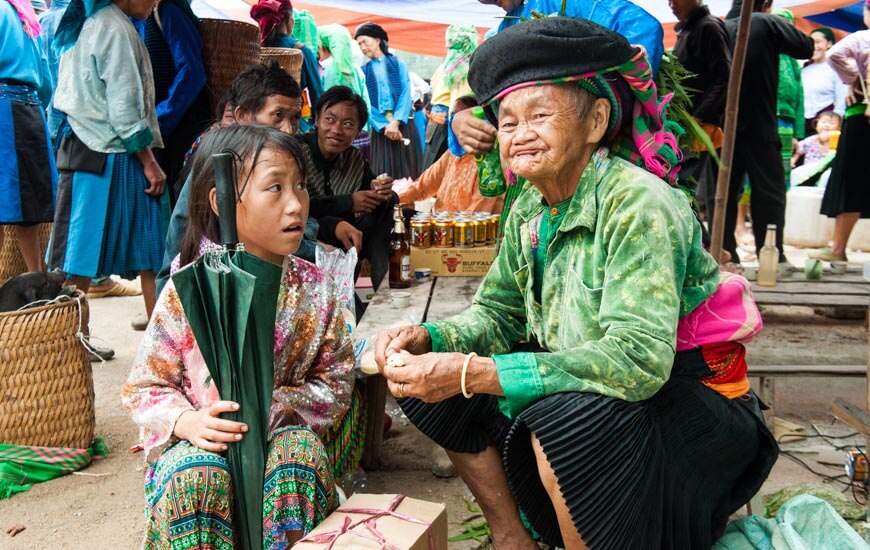 Grandmother and grandson at Dong Van market, Ha Giang
The northern part of the province forms a natural land border with China and is characterized by dizzying mountains, steep ravines, and the incredible plateau of the Dong Van limestone peaks. To set out for Ha Giang, simply follow the Dong Van circuit, a favorite route for motorcyclists through some of Vietnam’s most majestic landscapes.
It is worth stopping in the villages to indulge in the best hiking in Vietnam (or anywhere else in Southeast Asia). Overall, Ha Giang has not yet been affected by mass tourism, but the situation is changing rapidly and Dong Van is on the verge of becoming the next Sapa

Ma Pi Leng Pass
Now might be your last opportunity to explore the ethnic minority markets and homestays in Ha Giang. If you decide to visit Ha Giang, make sure to choose a responsible travel company like Amo Travel.
Read more about Ha Giang:
Everything about the buckwheat flower season in Ha Giang
Distance between Ha Giang and Dong Van
How to get to Ha Giang from Hanoi
Tu Le and Mu Cang Chai – A spectacular off-the-beaten-path place for a photography trip in Vietnam
If you have seen photos of rice terraces in Vietnam, chances are they were taken in or near Mu Cang Chai.
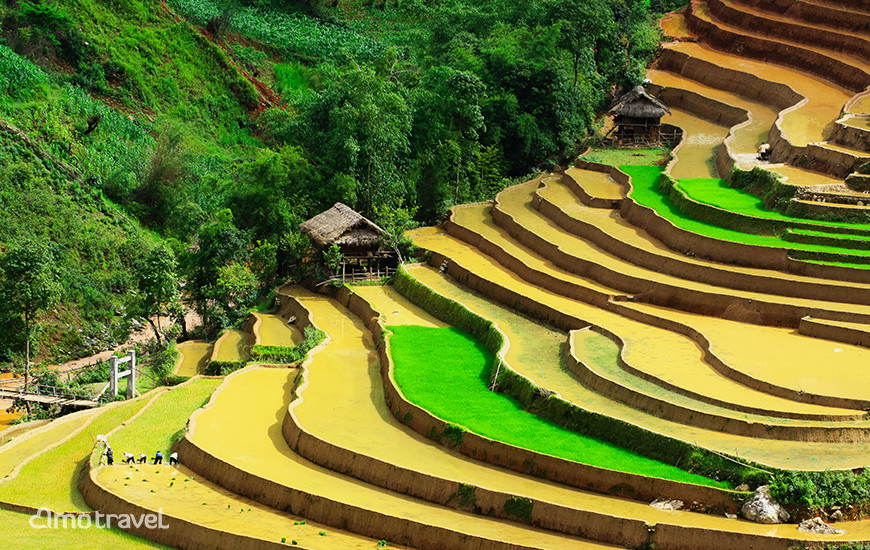
Rice terraces
It will be difficult to find this panorama in other parts of the country. Turning shades of bright green or yellow depending on the time of year, the massive terraces are a meteorological beacon for the seasons and the different stages of the rice harvest.
Due to its remote location, Mu Cang Chai district receives relatively few tourists. But if it is an interesting hike you are looking for, it is worth the trip.

Photography trip Vietnam to Tu Le and Mu Cang Chai
Read these articles about Mu Cang Chai:
How to get to Mu Cang Chai from Hanoi
Things to do in Mu Cang Chai, Tu Le, Northern Vietnam
What to eat in Mu Cang Chai
Ba Vi National Park
Being so close to Hanoi, it is surprising that more tourists do not take the time to visit Ba Vi National Park. Ba Vi is popular among Vietnamese families, especially on weekends and public holidays. A statue of Ho Chi Minh and a temple dedicated to Uncle Ho are located at the top of the park, the highest peak. It is said that the leader might be buried somewhere in Ba Vi and that a wax model rests in the Hanoi Mausoleum. Either way, Ba Vi is a spiritual and historical place.
We recommend taking your own transportation to explore the winding paths and abandoned buildings of Ba Vi at your own pace. There are also numerous hiking trails in the park. If you are looking for a place to stay nearby, we highly recommend Uncle Ty’s Farmstay.
Da Bac – Hoa Binh
A few years ago, three communities in the Da Bac district of Hoa Binh province formed an alliance to attract tourists to their villages. Their project—Da Bac Community-Based Tourism—is a perfect example of how alternative systems can thrive.
Visitors to Da Bac, Hoa Binh, can enjoy homestays, delicious home-cooked meals, hiking, water sports (two of the villages have access to the Da Bac river and lake), and cultural activities. Or, you can soak in a wooden tub filled with boiling water and herbs. This bathing ritual is an ancient herbal remedy of the Red Dao people, believed to improve circulation and general health.
Some groups visit Da Bac, but it is still considered off the beaten path. The families here need the support of tourists like you to carry out their plans. If you want to give back to ethnic communities while in Vietnam, Da Bac is the right place to do so.
Y Ty – Sapa
Located in the remote Bat Xat district, Y Ty is likely to become another alternative to the bustling town of Sapa in the future.
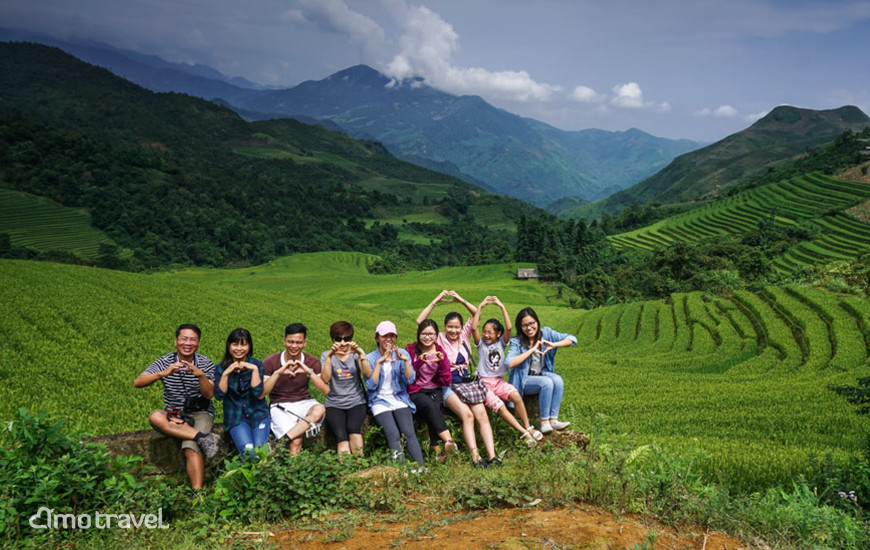
The region is full of picturesque landscapes, idyllic villages and, due to the high altitude, opportunities for “cloud hunting”—a popular activity in Vietnam that consists of taking photos on misty mornings. Although Y Ty remains underdeveloped and difficult to access for group tours, some non-governmental organizations, including the Management of Cultural Identity and Resource Use, are collaborating with ethnic minority groups in the region to introduce sustainable tourism.
These projects are part of a legal program aimed at securing land rights for members of ethnic minority communities—an urgent issue in this part of Northern Vietnam and a mission that certainly deserves support.
To learn more about the motorbike trip from Sapa to Y Ty: Y Ty Sapa
Cat Ba Island – Hai Phong City
Despite being the second largest city in Northern Vietnam, most tourists ignore Hai Phong, instead using it only as a ferry connection to Cat Ba Island. Your impression of Hai Phong will be that it has all the charm of Hanoi’s Old Quarter, but with less traffic and no tourists. Highlights include the yellow colonial buildings (the French left their mark on Hai Phong too) and a vibrant market.
Hai Phong also hosts an annual spring flower festival, which would be wonderful to see. The road from Hai Phong to Hanoi is the best highway in Northern Vietnam, making it a quick and convenient escape from the capital.
Read these articles:
Bus from Cat Ba Island to Sapa
Lan Ha Bay, another alternative to Halong Bay
Phong Nha – Ke Bang National Park
When a local logger discovered Son Doong Cave—the largest cave in the world—less than ten years ago, it sealed the fate of Phong Nha-Ke Bang National Park.
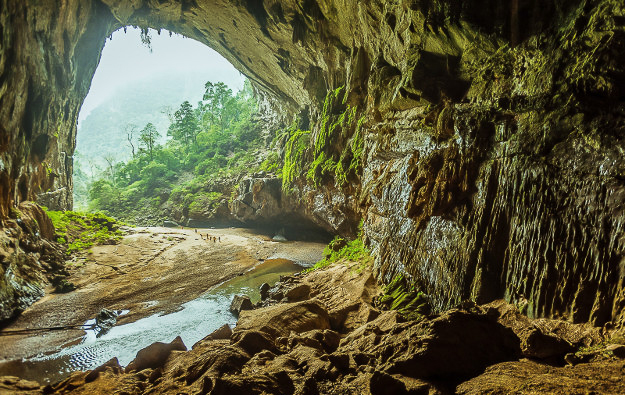
Tourism in the park and in the few small riverside villages nearby increases every year. When we visited in 2018, it was still quite peaceful. However, Phong Nha remains much quieter compared to other places.
Located in the narrowest part of Vietnam, very close to the Demilitarized Zone, this area was heavily bombed during the American-Vietnamese War. The landscape still bears scars from this period. But it is an absolutely beautiful and magical place, where you can cycle to the border with Laos through the largest karst park in the world. Caving, kayaking, hiking, and all kinds of adventure and outdoor activities are available.
To learn more: How to get to Dong Hoi and Phong Nha Ke Bang from Hanoi? (2018)
Diem Dien saltwater marsh, Thai Binh province
It might be one of the poorest provinces in Vietnam, but that does not mean Thai Binh is not beautiful. Located near Hanoi on the railway line leading to Ninh Binh, Thai Binh is a rural area with no specific tourist offerings. This makes the village of Diem Dien a hidden gem. Sea salt is the traditional industry along Thai Binh’s long coastline. Every day, hundreds of workers head to the fields to collect baskets of salt. A visit to Diem Dien and the other salt villages of Thai Binh offers unique photographic opportunities. It is also one of the most exhausting industries in Vietnam, reflecting the lives of those who work hard.
Pu Luong Nature Reserve
Pu Luong is probably the most pristine stretch of land during your stay in Vietnam. Protected by law since 1999, the 17-hectare reserve is valued for its flora and fauna. Numerous Thai and Muong ethnic communities live within the park’s boundaries, following a largely traditional lifestyle.
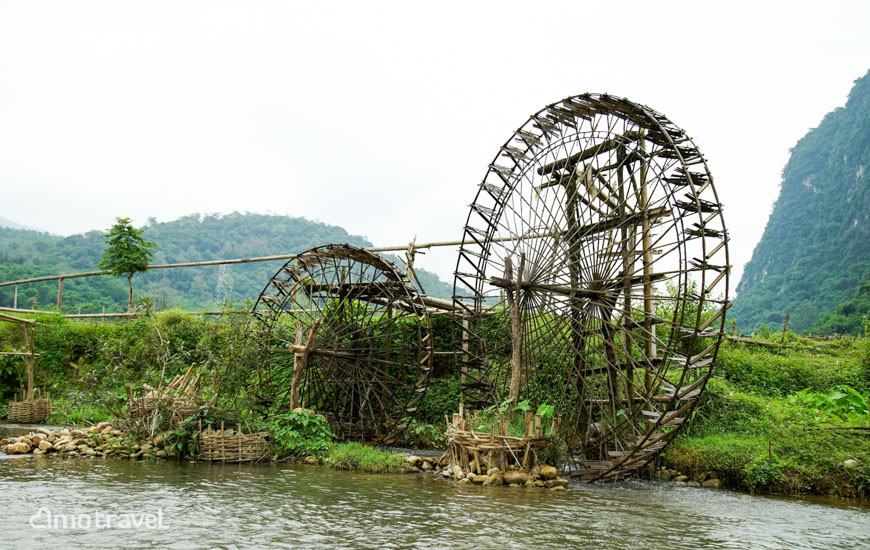
Among their works is the construction of the incredible bamboo water wheels that give Pu Luong its reputation. These magnificent structures capture water from low-lying streams and filter it through the rice fields using a series of bamboo pipes. You truly have to see it to appreciate it. Ancient technology set against the virgin forest, green meadows, and thatched hamlets: Pu Luong is exactly the kind of landscape that Vietnamese dreams are made of.
Access to Pu Luong is quite limited, which is obviously part of its charm. In 2018, we saw only a few other tourists. It is possible to explore the park with a multi-day hike. There are also host families where you can base your stay and start short treks.
Moc Chau – Son La
The modest old town of Moc Chau is almost completely overshadowed by nearby Mai Chau. Located less than 100 km down the road in Son La province (though certainly a bit harder to reach by public transport), Moc Chau is a great alternative to the tourist-heavy Mai Chau valley.
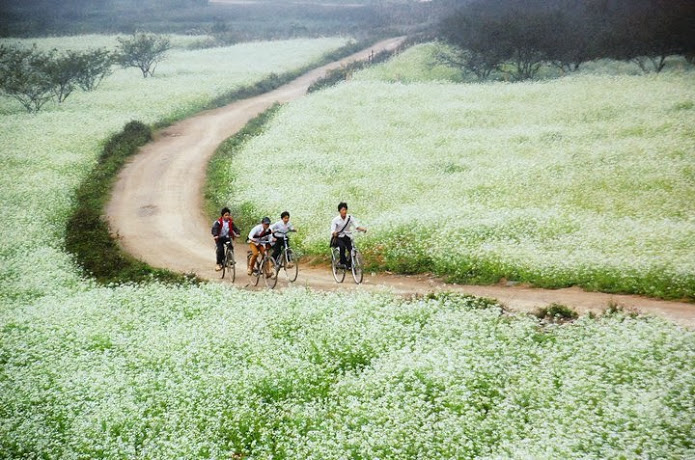
The best time to visit Moc Chau is in spring, when the landscape is enveloped in cherry blossoms. Other crops paint the hills in different shades at other times of the year.
Thai Nguyen Province
Many people associate Vietnam with coffee. But before French colonization, it was a tea-drinking nation. Thai Nguyen province, just north of Hanoi, is the hub of the tea industry and produces much of the green tea exported from Vietnam.
You can find tea bags bearing the province’s name throughout Hanoi and northern Vietnam. There are dozens of private tea plantations located near Thai Nguyen city, which is also a modest urban area. Owners invite customers to have tea before accompanying them into the fields to observe the tea pickers at work.
Thai Nguyen also hosts the Museum of the Cultures of Vietnam’s Ethnic Groups and the fascinating Thai Hai Tay ethnic village. We highly recommend visiting both.
Nam Dinh Province
Nam Dinh province, which stretches to the Gulf of Tonkin across the fertile Red River Delta, is renowned for its dense concentration of Roman Catholic churches. Missionaries first arrived in Vietnam here in the 1500s; Nam Dinh is therefore known as the cradle of Catholicism in the country.
Many churches in Nam Dinh are still used today by the Catholic community. Others have been abandoned and left to the elements.
Few tourists have the chance to see the architecture of these churches. The most impressive cathedral is located in the municipality of Hai Ly. Saint Maria Madalena, built in 1943, was constructed inland, but due to coastal erosion, it is now perched precariously on the shoreline.
Tuyen Quang Province
The town of Tuyen Quang is rich in revolutionary history. Monuments such as the Hong Thai temple and the Tan Trao banyan tree are linked to Vietnam’s struggle for independence.
Na Lua, the hut where Uncle Ho lived during a period in 1945 while preparing the resistance against the French, is preserved in Tuyen Quang and constitutes a pilgrimage site for Vietnamese nationalists.
Guests can visit mineral springs and caves on the outskirts of Tuyen Quang and the nearby Thac Ba Lake.
Thac Ba Lake
Located about halfway between Hanoi and Sapa, Thac Ba Lake is an artificial lake created in the 1970s with a hydroelectric dam. On Google Maps, the lake looks like a spotted mess. These jagged spots are actually hundreds of individual islands—1,300 to be precise—covered in green forests.
Host families around the lake and in the nearby city of Yen Bai offer boat trips and other water activities for tourists. Vu Linh, a lakeside village, is a beautiful place for your stay.
Hanoi off the beaten path
Even if you are looking to avoid northern Vietnam’s hotspots, a few days in Hanoi are a must. There are many residential areas and historic suburbs where you can escape the chaos of the center. Similarly, there are an unlimited number of “secret” places hidden from view—such as the Long Bien Bridge and “Banana Island”—that escape most tourists’ radar.
Wake up when the sun rises to see Hanoi from a totally different perspective. Take a day trip to the ancient village of Duong Lam on weekdays to experience a slice of village life.
Stay in beautiful hotels to explore Hanoi’s heritage architecture and winding alleys. There are many opportunities to visit off-the-beaten-path places in northern Vietnam’s largest metropolis.
Tips for Hanoi off the beaten path:
Roman Holiday in Hanoi by bicycle
Train Street in Hanoi: Discover life on the railway in Vietnam
Best family hotels in Hanoi
AMO TRAVEL | The Pioneer Tour Operator for Vietnam, Cambodia, Laos, Myanmar, and Thailand
License No: 01-578 / 2013 / TCDL-GPLHQT
Headquarters: 7, 173/75 Hoang Hoa Tham, Ba Dinh, Hanoi, Vietnam
Hotline/WhatsApp: +84-913552325 | Tel: +84-24-7303 8186
Email: sales@amotravel.com
Web: https://amotravel.com (English)
https://www.amotravel.com/it/ (Italian)
https://www.amotravel.com/fr/ (French)
