


THE FACE OF HOI AN (PART 1)
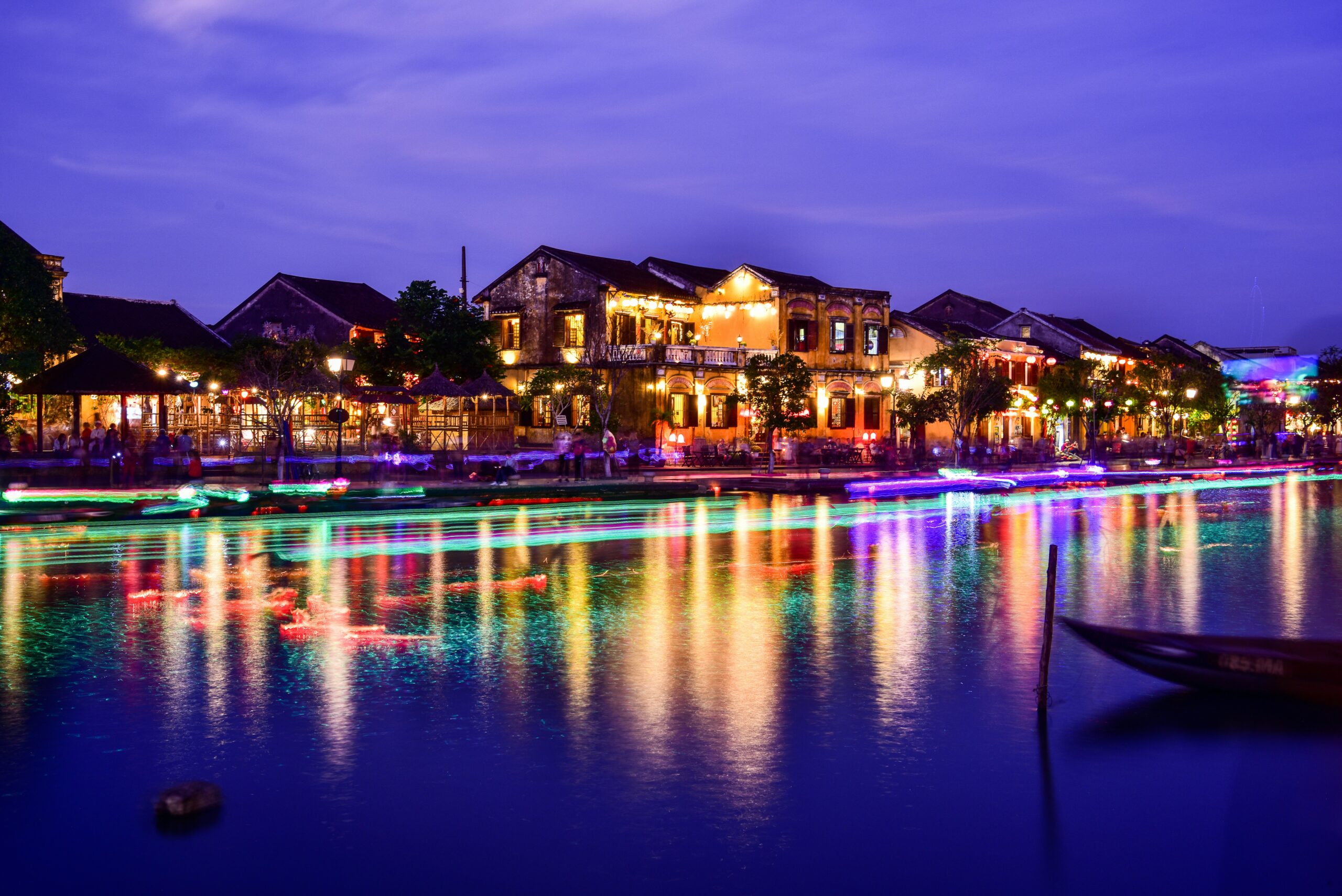
The Ancient Town of Hoi An, with over 400 years of history, captivates travelers with its authentic charm. The iconic ochre-yellow houses, vibrant colorful lanterns, and serene atmosphere create an irresistible backdrop for photography.
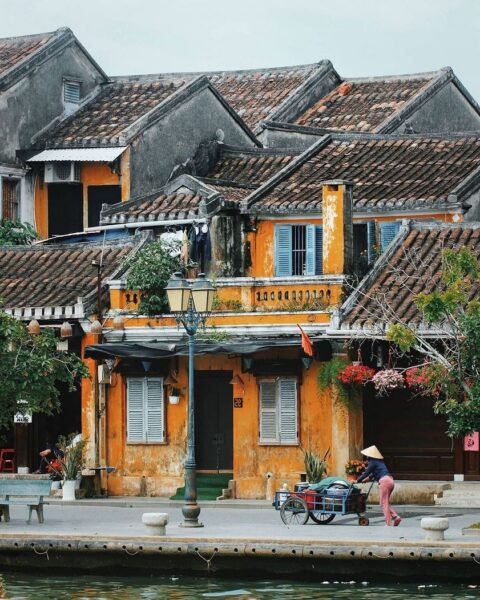
Hoi An also wins the hearts of visitors through its exceptional local gastronomy and the warm hospitality of its inhabitants. During your journey to Hoi An, take the time to explore the historic center and stroll along the romantic Hoai River.
The narrow alleys, ancient tiled roofs, and ornate community halls tell a unique story of cultural heritage. Often referred to as the “Little Venice of Asia,” Hoi An is the ideal destination for those seeking evocative and soulful travel. Walking among lanterns, artisan workshops, and traditional coffee shops offers truly unforgettable moments.
1.INTRODUCTION TO HOI AN
Located in Quang Nam Province in Central Vietnam, the ancient town of Hoi An sits approximately 30 kilometers from the vibrant coastal city of Da Nang. Due to their proximity, many travelers combine both destinations for a rich and diverse travel itinerary.
In its golden age, Hoi An was a thriving international trading port. Today, it remains a living museum, preserving magnificent ancient architecture, ornate temples, and traditional wooden houses. After centuries, the city has kept over a thousand historic sites nearly intact.
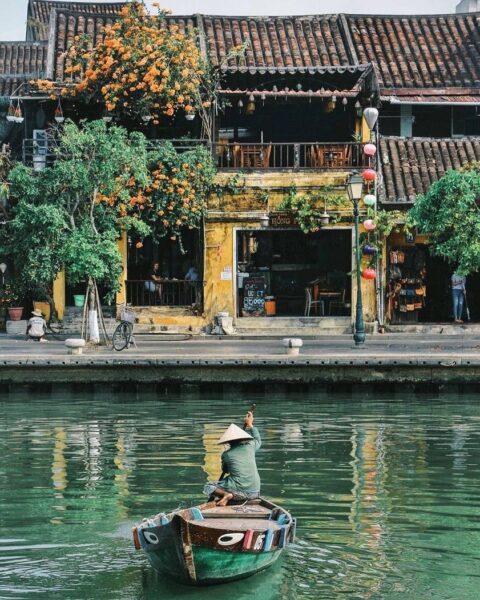
Strolling beneath moss-covered rooftops offers a timeless atmosphere that feels worlds away from the modern pace of life. A visit is not complete without seeing the famous Japanese Covered Bridge, the enduring symbol of Hoi An.
The town’s vibrant bougainvillea flowers draping over ancient walls provide perfect corners for photography. Beyond its beauty, the local cuisine is another reason to fall in love with the city. Be sure to savor authentic delicacies such as Banh Dap (smashing rice paper), sautéed clams, sweet corn soup, and the world-renowned Hoi An Chicken Rice.
2.HISTORY AND ARCHITECTURE OF HOI AN ANCIENT TOWN
Historical Overview
Hoi An was established toward the end of the 16th century along the banks of the Thu Bon River. In its prime, it served as one of Asia’s most significant international trading ports, acting as a crossroads where Chinese, Japanese, and Western merchants met to exchange goods and culture.
The city’s most flourishing period occurred between the 17th and 18th centuries. The heart of this legacy is preserved in the Minh An district, where the historic center covers an area of approximately two square kilometers.
Architectural Heritage
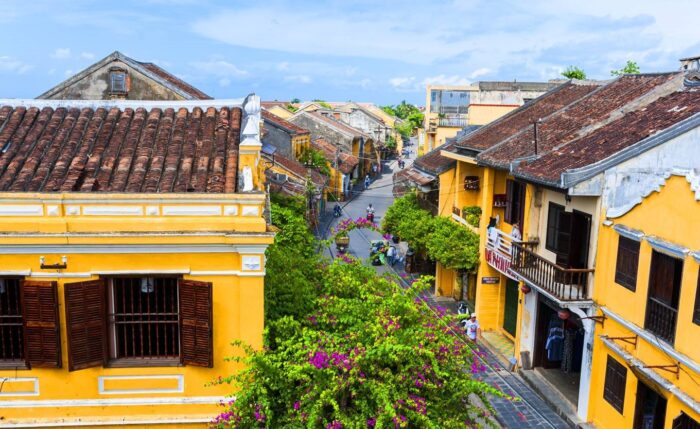
The traditional houses of Hoi An are characterized by their unique elongated “tube-house” design, typically featuring one or two stories. These structures possess narrow facades but are surprisingly deep and airy inside, often punctuated by open courtyards that invite light and wind.
The architecture of Hoi An reflects an extraordinary cultural fusion, where Vietnamese, Chinese, Japanese, and Western influences are seamlessly interwoven. This unique stylistic blend has created a fascinating and perfectly preserved heritage that remains a jewel of Southeast Asia.
3. WHAT TO DO IN THE ANCIENT TOWN?
The Japanese Covered Bridge (Pagoda del Ponte)
Dating back to the 17th century, the Japanese Covered Bridge spans approximately eighteen meters across a small canal. Constructed primarily of wood and shielded by an elegant tiled roof, this bridge represents a magnificent meeting point between Vietnamese, Japanese, and Chinese architectural styles.
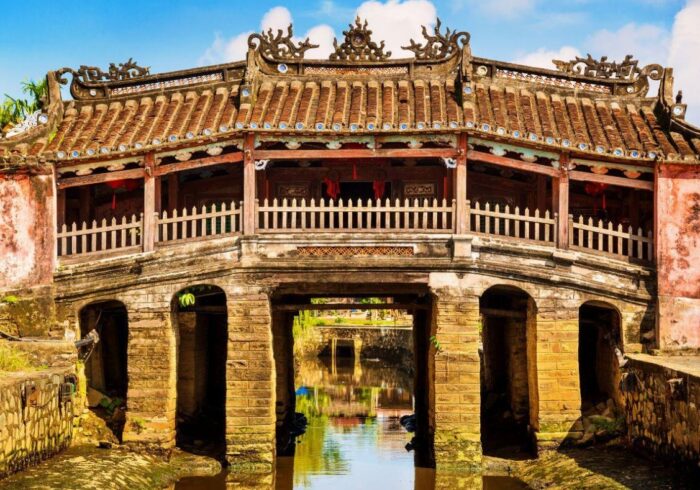
Considered the true historic emblem of Hoi An, it is not a traditional Buddhist temple. Instead, it houses a shrine dedicated to a protective deity associated with the sea and storms.
The architecture features finely carved decorations, with wooden beams displaying ancient inscriptions and ornamental motifs. The roof is crafted using traditional “interlocking” tiles. At both ends of the bridge, symbolic statues of dogs and monkeys stand guard, representing protection, loyalty, and good fortune for travelers.
Ecco la traduzione in inglese per la sezione dedicata al Tempio di Guan Yu (Chua Ong), ideale per il tuo materiale informativo su Hoi An.
Guan Yu Temple (Chua Ong)
The Guan Yu Temple, also known as Chua Ong, dates back to the mid-17th century. The sanctuary is dedicated to the legendary General Guan Yu, a symbol of loyalty, integrity, and justice.
The temple’s layout follows the traditional closed-courtyard model, creating harmonious and protected spaces. Its layered structures showcase multi-tiered roofs and finely carved decorations. The complex comprises four main buildings and a spacious entrance courtyard.
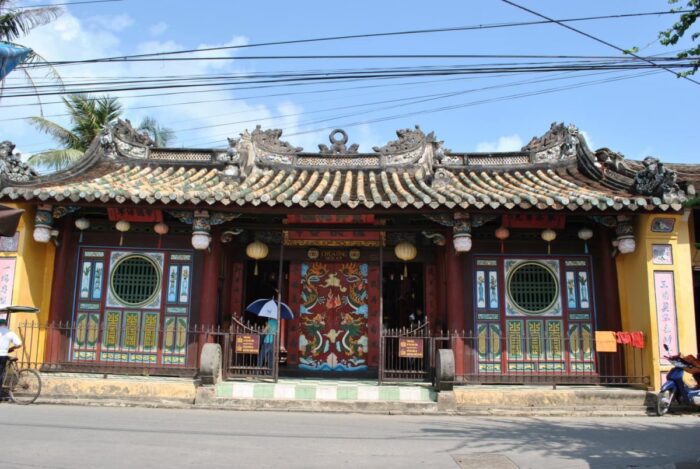
In the central hall, the imposing statue of Guan Yu stands out, dressed in green robes adorned with golden dragons. Flanking him are the figures of Zhou Cang and Guan Ping, his faithful attendants.
The temple hosts various ceremonies, traditional festivals, and rituals where visitors pray for protection and good fortune. It is an evocative stop for those wishing to understand the spirituality, art, and history of Hoi An. Visiting this site enriches any cultural itinerary, especially during the suggestive atmosphere of sunset.
ANCIENT HOUSES WITH UNIQUE CHARM
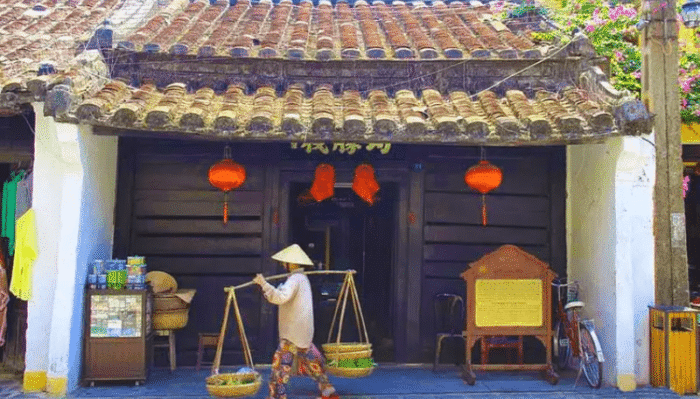
The historic dwellings of Hoi An captivate visitors with centuries of history and refined artisanal details. Each house tells a story of ancient traditions, thriving trade, and interwoven cultural influences.
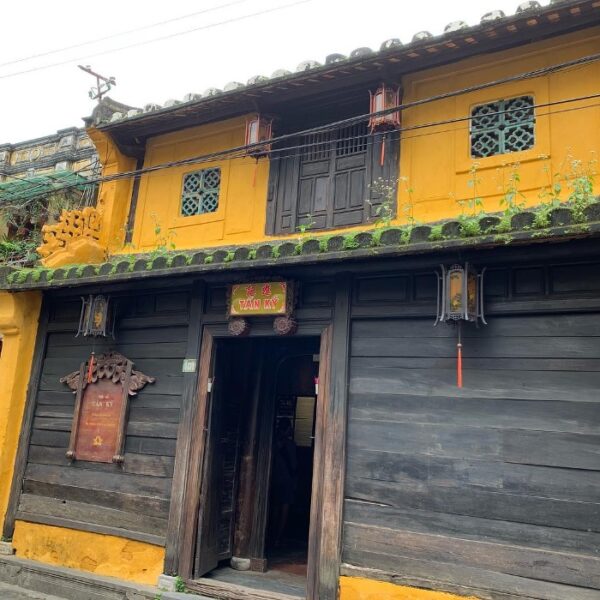
Tan Ky Ancient House
This residence, over two centuries old, has belonged to the Le family for seven generations. Its architecture harmoniously blends Vietnamese, Japanese, and Chinese elements. Visitors can admire precious artifacts and numerous picturesque corners, perfect for photography.
Phung Hung Ancient House
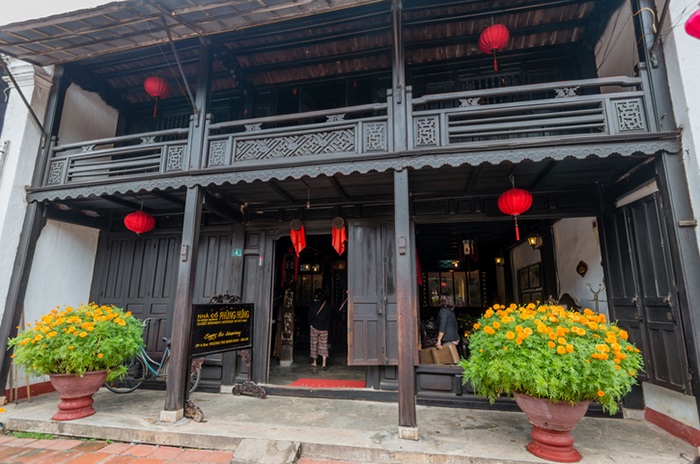
This house features elegant “yin-yang” tiled roofs and finely carved wooden decorations. The structure combines residential and commercial spaces, a design typical of the merchants from a bygone era.
Quan Thang Ancient House
Preserving an authentic antique atmosphere, this house stands out for its time-worn walls and evocative interiors. Visitors can discover gilded panels and inscriptions carved with incredible craftsmanship.
CHINESE ASSEMBLY HALLS ALONG TRAN PHU STREET
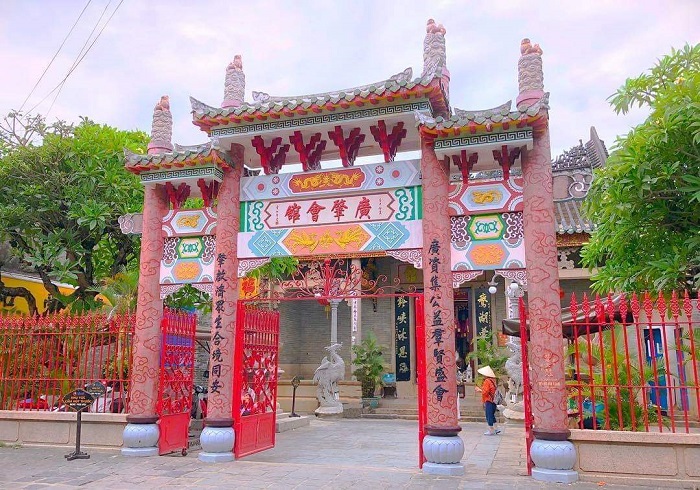
The Assembly Halls are among the most beloved spots for photography enthusiasts visiting Hoi An Ancient Town. Along Tran Phu Street, you will find several halls that bear a distinctive Chinese architectural and cultural imprint, such as:
Cantonese Assembly Hall (Guangdong)
A place to discover many precious relics, including ornate ceramic panels and figurative statues. It is also a vibrant center for participating in ancient traditional festivals.
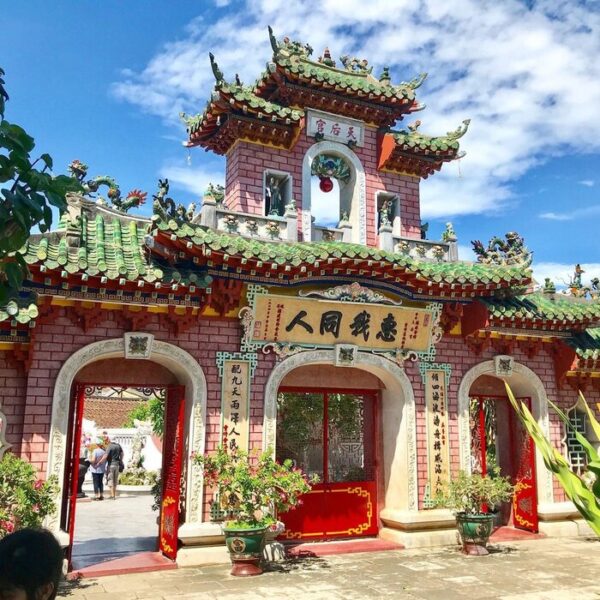
Fujian Assembly Hall (Phuc Kien)
Perfect for admiring unique architecture with finely carved decorations. Here, visitors can experience the grand festival dedicated to the Goddess of the Sea (Thien Hau) and capture stunning photographs of its iconic red gateways.
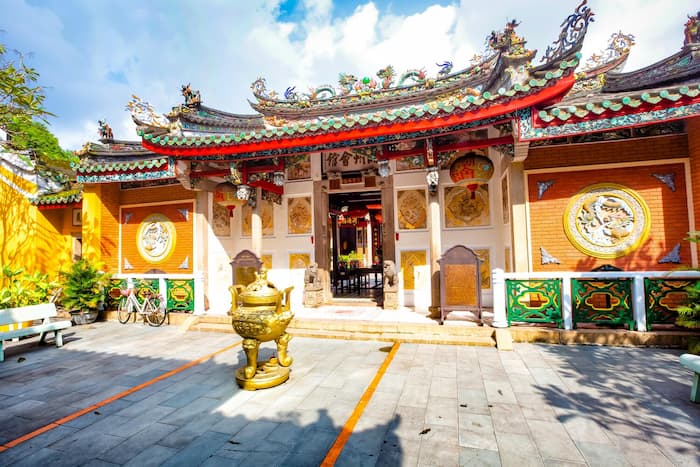
Teochew Assembly Hall (Trieu Chau)
An ideal site to contemplate the art of meticulous craftsmanship, visible in the intricate carvings of wooden doors, altars, and columns. It is also well-known for the evocative rituals held during the Lunar Mid-January celebrations.
THE MAGIC OF HOI AN: LANTERNS, RIVERS, AND TRADITIONS
Hoi An Lantern Street
Hoi An’s Lantern Street captivates visitors with thousands of colorful lanterns that glow throughout the night. While this area is always bustling, it becomes even more enchanting at sunset, especially on the 14th day of the lunar month (Full Moon Festival).
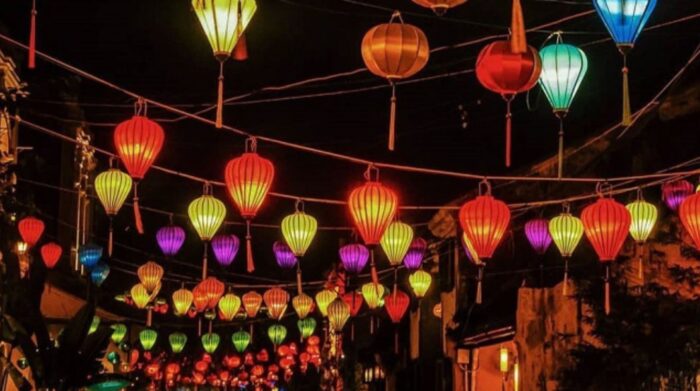
When strolling here, wearing a long dress or an elegant Ao Dai is the perfect way to capture evocative photographs. Additionally, you will have the chance to discover how traditional lanterns are handcrafted and taste local gastronomic specialties that are simply delicious.
The Hoai River
The Hoai River is an inseparable symbol of Hoi An Ancient Town. A branch of the Thu Bon River, it flows through the heart of the city and sustains the lives of local residents
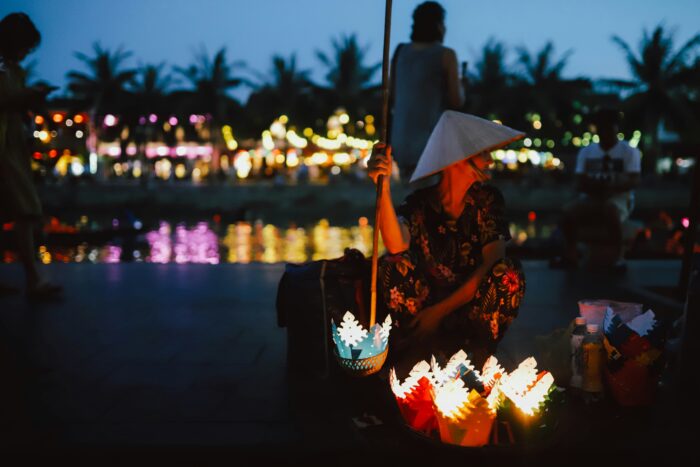
Local boats offer peaceful scenic cruises along the river at any time of day, allowing you to admire Hoi An from the water. Listen to the stories of the rowers to uncover local traditions. In the evening, releasing floating lanterns onto the water offers a deeply suggestive and romantic experience.
Hoi An Market
Dating back to the 17th century, the Hoi An Market is steeped in historical charm. It is particularly striking for its unique architecture featuring French colonial influences.
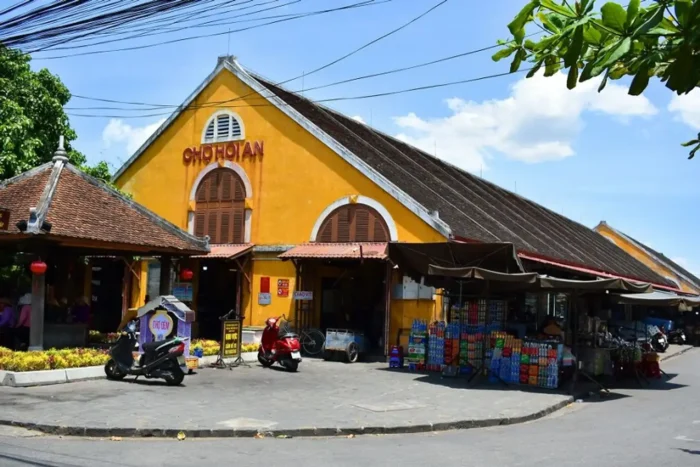
As one of the most vibrant and authentic spots in the ancient town, it offers colorful stalls, inviting aromas, and a traditional atmosphere. Taste local specialties such as Mi Quang (Quang-style noodles), Cao Lau, and Chicken Rice. Don’t miss the freshly made rice pancakes and grilled meats. The prices are affordable, making it the ideal place to enjoy a feast without spending much.
The Bougainvillea of Hoi An
In summer, the ancient streets of Hoi An come alive with the vibrant colors of bougainvillea. These delicate flowers drape beautifully over the ancient tiled roofs, creating some of the most photographed spots in the city.
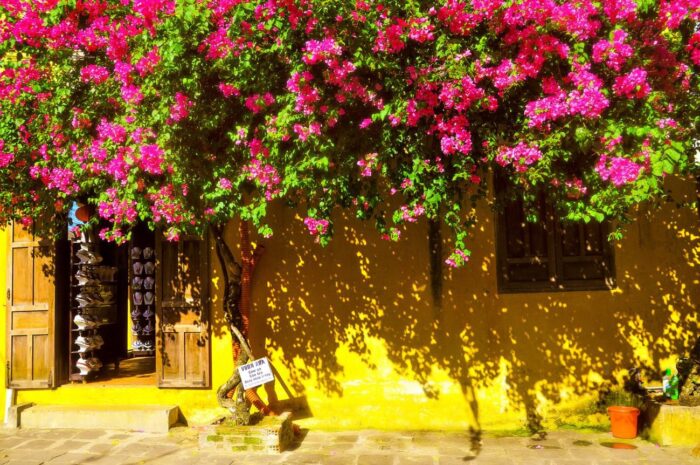
A cyclo (rickshaw) ride beneath these blossoms is a suggestive experience that perfectly blends culture with natural beauty.
Iconic Cafés of Hoi An
The cafés in the historic center are perfect for both relaxation and photography:
Faifo Coffee (130 Tran Phu): Famous for its panoramic rooftop terrace overlooking the ancient streets.
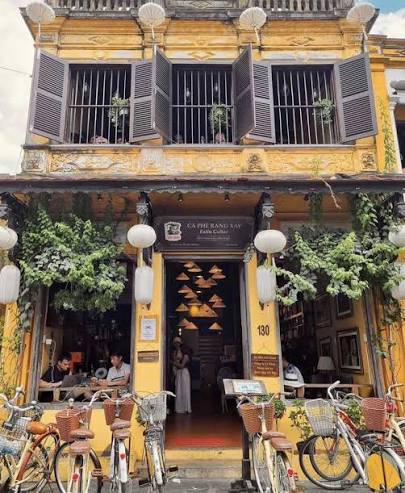
Mot Tea (150 Tran Phu): Known for its traditional herbal tea served with lotus petals in an inviting, rustic atmosphere.
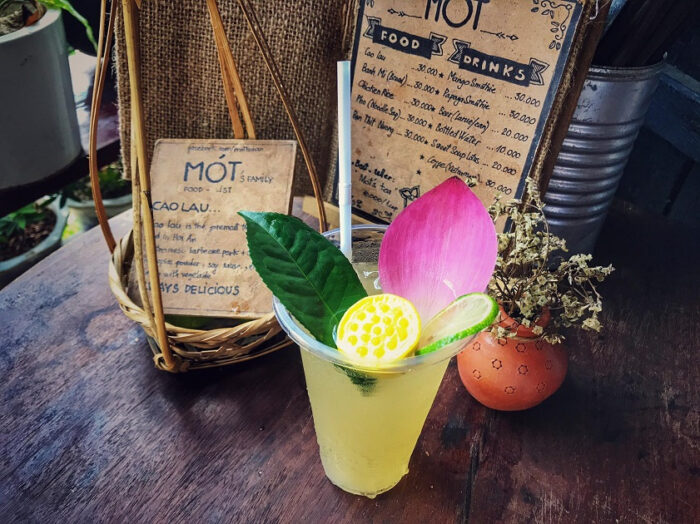
Nha An (23 Phan Chau Trinh): Offers peaceful corners and herbal teas served with eco-friendly bamboo straws.
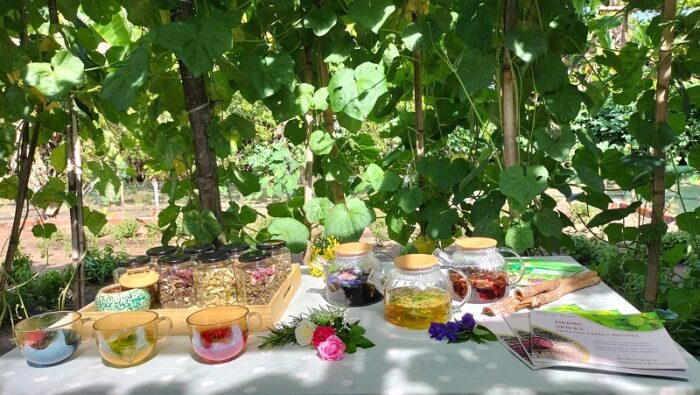
Continuiamo in:
https://www.amotravel.com/it/la-faccia-di-hoi-an-parte-2/
