


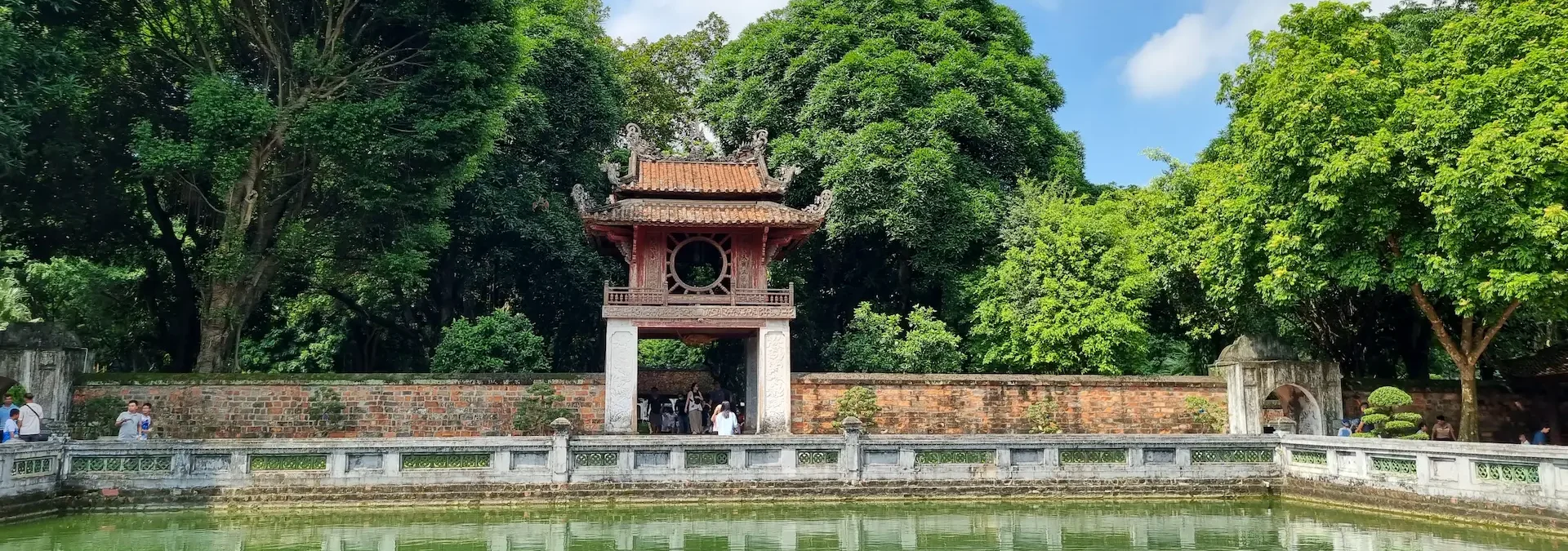
Vietnam
Official Name: Socialist Republic of Vietnam (Cộng hòa Xã hội Chủ nghĩa Việt Nam)
Capital: Hanoi (Hà Nội)
Official Language: Vietnamese (Tiếng Việt). English is widely used in major cities, tourism hubs, and the business sector.
Currency: Vietnam Dong (VND – ₫)
Population: Approximately 102,3 million
Vietnam officially surpassed the 100-million milestone in 2023, maintaining a dynamic and young demographic.
Time Zone: UTC +7 (No Daylight Saving Time).
Religions & Beliefs:
- A harmonious blend of Buddhism, Catholicism, Protestantism, and indigenous faiths (Cao Dai, Hoa Hao).
- Ancestral Worship remains a cornerstone of Vietnamese spiritual life, practiced by the majority of the population regardless of their formal religious affiliation.
Government: Unitary Marxist-Leninist one-party socialist republic.
Climate:
- North: Subtropical with four distinct seasons. Cool, dry winters (Nov–Apr) and hot, humid summers with high rainfall.
- Central: Tropical climate. Characterized by a prolonged dry season, followed by a rainy season (typically Oct–Dec).
- South: Tropical monsoonal climate. Consistently warm year-round (avg. 27-30°C) with two seasons: Dry (Nov–May) and Rainy (Jun–Oct).
Key Cities & Destinations:
- Hanoi: The political, cultural, and historic heart of the nation.
- Ho Chi Minh City (Saigon): The vibrant economic locomotive and modern metropolis.
- Da Nang: A modern coastal city, strategically located as the gateway to Central Vietnam’s heritage sites.
- Hue & Hoi An: Iconic centers for history, architecture, and traditional culture.
- Phu Quoc Island: Vietnam’s premier luxury beach destination in the Gulf of Thailand.
- Can Tho: The bustling capital of the Mekong Delta.
ENTRY REQUIREMENTS AND DOCUMENTATION
Travel Documents for Entering Vietnam
Passport
To enter Vietnam, travelers must possess a passport valid for at least 6 months beyond the date of entry. The passport should have at least two blank pages for entry and exit stamps. It is highly recommended to verify any specific requirements with the nearest Vietnamese diplomatic mission, such as the Embassy of Vietnam, or through a professional travel consultant.
Visa Policy and Exemptions
Vietnam offers a generous visa exemption policy for citizens of various countries. As of 2026, Italian citizens and several other European nationalities are granted visa-free entry for stays up to 45 days, including the dates of entry and exit.
For travelers who are not eligible for visa exemption, or for those planning to stay longer than 45 days (up to a maximum of 90 days), an E-Visa is required. The E-Visa system now supports both single and multiple entries, which is ideal for travelers planning to visit neighboring countries like Cambodia or Laos and then return to Vietnam. Applications must be submitted through the official Government E-Visa portal.
Currency and Customs Formalities
Upon arrival, travelers may be required to complete a customs declaration. While traditional paper forms are still available, major international airports like Hanoi (Noi Bai) and Ho Chi Minh City (Tan Son Nhat) have increasingly shifted toward digital declarations via QR codes or dedicated kiosks. Any stamped declaration forms must be kept safely until departure.
Mandatory Declarations
Travelers must declare the following items upon entry: Cash amounts exceeding 5,000 USD or the equivalent in other foreign currencies. Cash amounts exceeding 15,000,000 VND. Precious metals, high-value jewelry, and professional electronic equipment. Drones (Flycams): The entry of drones is strictly regulated in Vietnam. Bringing a drone into the country requires prior authorization from the Ministry of Defense. Without a permit, drones will likely be confiscated at the airport customs. Failure to comply with customs regulations may result in fines, confiscation of goods, or significant delays when leaving the country.
BAGGAGE REGULATIONS AND POLICIES
General Transport Rules
Each passenger is entitled to carry a total maximum of 27 kg of baggage, divided between carry-on and checked luggage, as follows:
Carry-on Baggage
Maximum allowable weight: 7 kg
Maximum dimensions: 56 x 36 x 23 cm (22 x 14 x 9 inches)
Must fit in the overhead bin or under the seat in front of the passenger
Duty-Free Items
Purchases such as liquors, cigarettes, and perfumes are permitted in reasonable quantities across all travel classes.
Due to international liquid regulations, items must be correctly sealed in a Security Tamper Evident Bag (STEB) to pass security checkpoints.
Checked Baggage
Standard allowance: 20 kg per person
Baggage must be durable, clearly identifiable, and compliant with the carrier’s safety standards
Lost or Damaged Baggage Procedures
- Immediate Verification upon Retrieval
Upon collecting your luggage, immediately check for signs of damage or missing items. If any issues are found, you must remain at the airport and contact the Lost & Found office or the airline’s baggage services desk before leaving the terminal.
- Filing a Property Irregularity Report (PIR)
Airline staff will record a PIR, which is the official document for baggage irregularities. Please retain the PIR reference number, as it is essential for any future claims or compensation requests.
- Claim Deadlines
Damaged or missing items: within 7 days from the scheduled delivery date
Delayed baggage: within 21 days from the scheduled delivery date
- Baggage Tracking
Airlines utilize the WorldTracer system to locate missing luggage. Passengers can monitor the status or update their delivery address directly through this global system.
Reddit+12Vietnam Airlines+12Vietnam Airlines+12.
- Delivery of Found Baggage
Once located, you will be contacted to arrange delivery. Depending on local customs regulations, you may choose to collect it at the airport or have it delivered to your accommodation. Vietnam Airlinesvietnamairway.com.
- Compensation and Liability
If baggage is not recovered within 21 days, a formal compensation process begins. According to international conventions (such as the Montreal Convention):
Liability limits: Approximately 1,288 SDR (Special Drawing Rights) for EU-connected flights, International flights: Approximately 20 USD/kg based on applicable conventions
- Required Documentation
Completed PIR form
Baggage tags/claim stubs
Flight ticket and boarding pass
Photos of the damage (if applicable)
Purchase receipts for the luggage and its contents
- Travel Insurance
If you have private travel insurance, contact your provider immediately with a copy of the PIR. They may require additional documentation from local police or airport authorities.
Useful Tips for Prevention
Take photos of your baggage before check-in
Attach clear and visible contact tags to the exterior
Place a unique identifier inside (e.g., a colored ribbon or a specific item)
Always carry valuables, jewelry, and electronics in your carry-on bag
Airport Contacts (Main Hubs)
Noi Bai International Airport (Hanoi)
Lost & Found: Floor 1, International Terminal (T2) or Domestic Terminal (T1)
Phone: (84-24) 3884 0008 / 3886 5002 (Ext. 3134)
Email: xld.pvhk2@niags.com.vn
Tan Son Nhat International Airport (Ho Chi Minh City)
Lost & Found: Terminal 2
Phone: (84-8) 3547 0415 / 3844 6665 (Ext. 6062)
Email: lostandfound.viags@vietnamairlines.com
Other Airports (Da Nang, Nha Trang, etc.) Dedicated phone numbers and emails for each airport (verifiable on the Vietnam Airlines website or through local contact)
vietnamairtickets.comvietnamairway.com
WEATHER
Vietnam stretches approximately 1,800 km in latitude, and the climate in the two major cities—Hanoi in the north and Ho Chi Minh City (formerly Saigon) in the south—displays very different characteristics, with higher temperatures in the southern regions. Humidity levels are very high throughout the country, which tends to increase the perception of both heat and cold across different seasons.
North Vietnam (e.g., Hanoi, Ha Long Bay, Sapa)
Humid subtropical climate with four distinct seasons:
Winter (November – March): Dry with light drizzles, temperatures between 10 – 20°C.
Spring (April – May): Mild and pleasant, ideal for traveling.
Summer (June – August): Hot, humid, and rainy, with monsoons and temperatures exceeding 30°C.
Autumn (September – October): Less rain and no scorching sun, with mild temperatures.
Central Vietnam (e.g., Hue, Da Nang, Hoi An)
Tropical climate with less distinct seasons but influenced by two monsoons.
Dry season: From January to late August, with intense heat from May onwards (up to 35 – 38°C).
Rainy season: From September to December, often with typhoons and torrential rains.
Mountainous areas like the Central Highlands enjoy a cooler climate.
South Vietnam (e.g., Ho Chi Minh City, Mekong Delta)
Equatorial tropical climate, warm all year round, with two main seasons:
Dry season (November – April): Hot and sunny climate, temperatures around 28 – 35°C.
Rainy season (May – October): High humidity and abundant rainfall, often in the afternoon. Brief but intense.
The average temperature recorded throughout the year is approximately 28°C, rarely falling below 25°C.
PACKING ESSENTIALS
The clothing requirements for a holiday in Vietnam vary depending on the time of year and the specific regions visited, given the country’s vast latitudinal extent.
General Rules
Traveling light is always a smart choice.
Local laundries: Widely available, affordable, fast, and efficient in all cities (dry cleaning is typically available only in high-end hotels).
Well-stocked shopping malls are present in all major cities (Hanoi, Ho Chi Minh City, Da Nang) for any last-minute needs.
What to Bring (Based on Season and Region)
North Vietnam
Winter (Nov–Mar): Heavy clothes, jackets, and sweatshirts. Temperatures can drop below 10°C.
Summer: Light and breathable clothing, but include layers for rain and high humidity.
Central and South Vietnam
Year-round: Hot and humid climate. Bring light clothing made of cotton or linen.
Rainy season (May–Oct): A light raincoat and quick-drying sandals or shoes.
Recommended Footwear for Classic Itineraries
For most travelers, comfortable sneakers are more than sufficient.
Trekking boots are not necessary for urban or classic tourist routes (Hanoi, Ho Chi Minh City, Hoi An, etc.).
Religious Sites
It is essential to wear appropriate clothing when visiting religious monuments, covering both shoulders and knees. Even where not strictly mandatory, it is highly recommended as a sign of respect for local culture.
Excursions and Remote Areas
Trekking / Forest / Rural zones: Long clothing, closed shoes, a hat, and insect repellent.
UV protection (hat, sunglasses, sunscreen) is vital in areas with little shade.
For prolonged trekking or mountainous itineraries, we recommend:
Light trekking or trail running shoes.
Durable footwear with good grip.
In North Vietnam during winter, warmer clothes and robust closed footwear are suggested as temperatures can dip below 10°C. However, shops selling jackets and winter gear are very common.
Elegant Clothing
Generally unnecessary unless attending specific formal events or dinners.
The style in tourist cities is informal.
Essential Checklist
Breathable T-shirts
Lightweight long trousers
Sandals + walking shoes
Waterproof/windproof jacket
Warm layers (only for the North in winter)
Hat and sunglasses
Scarf or sarong for temples
Mosquito repellent
In Case of Rain (Monsoon Season)
Vietnam experiences monsoon rains, mainly from May to October. Showers are often brief but intense, usually occurring in the late afternoon or at night.
Rain Gear
Waterproof jackets can offer quick protection but may feel uncomfortable due to high heat and humidity. A lightweight cape or breathable poncho is often a better alternative.
Umbrellas
All our tour vehicles are equipped with umbrellas for travelers to use whenever necessary.
Waterproof Bags
Highly recommended during the rainy season to protect documents, electronics, and camera equipment.
Sun Protection (Heat and UV Rays)
Vietnam has a tropical and subtropical climate with high UV indices, even on cloudy days.
Sunscreen
Use high-protection sunscreen (SPF 50 or higher) and apply it several times a day.
Clothing and Accessories
Wear light-colored, breathable fabrics (cotton/linen). Use wide-brimmed hats and UV-filter sunglasses.
Hydration and Health
Drink plenty of water even if you don’t feel thirsty. Avoid excessively sugary or alcoholic drinks during peak heat hours (11:00–15:00).
Mosquito Prevention
Mosquitoes are most active during the rainy season, in the evenings, and in rural areas like the Mekong Delta.
How to Protect Yourself
Use DEET-based repellents (20-30%) or effective alternatives like Icaridin.
Wear long-sleeved clothing in the evening.
Most hotels have air conditioning, which helps deter mosquitoes. In rural homestays, mosquito nets or plug-in repellents are provided.
Vaccinations – Information and Suggestions
Officially, no mandatory vaccinations are required for travelers from Europe unless arriving from a Yellow Fever risk zone.
Our Suggestion
For classic tourist itineraries, we do not consider specific vaccinations necessary. This is based on local operational experience and does not replace medical advice. Please consult a travel medicine center at least one month before departure.
Food Hygiene and Health Precautions
To avoid gastrointestinal issues:
Avoid raw or undercooked foods (meat, fish, unwashed salads).
Drink only bottled or canned beverages with sealed caps.
Avoid ice in drinks unless prepared in a safe environment.
Wash hands frequently or use hand sanitizer.
For tours with included meals, we rely exclusively on selected restaurants with proven high hygiene standards.
SAFETY AND SECURITY
A Safe and Welcoming Country
Vietnam is a highly hospitable nation and is generally considered safe for all types of travel, whether individual or group-based. The government pays great attention to the protection of tourism, which is a vital part of the national economy. Our proposed tours are designed to ensure maximum comfort and peace of mind, including during transfers and evening activities.
Recommended Behavior
Maintaining a respectful attitude toward the local people and culture is sufficient for a peaceful experience.
Avoid:
Unnecessary arguments or controversies.
Visiting ambiguous venues or unclear situations, especially late at night.
Taking photos of law enforcement personnel or government buildings unless expressly permitted.
Zero Tolerance for Drugs and Exploitation
Local laws are extremely strict regarding:
Drugs (even in small quantities).
Prostitution.
Crimes against minors.
These are considered very grave offenses that can lead to long prison sentences or even the death penalty.
Remote Areas and Unexploded Ordnance (UXO)
It is not recommended to venture independently into rural or remote areas outside of the planned itinerary without first consulting a local guide.
Some areas, especially along borders or in mountainous regions, may still harbor landmines and unexploded war remnants.
CURRENCY AND PAYMENTS
Local Currency
The official currency of Vietnam is the Vietnamese Dong, often abbreviated as VND or simply đ.
The banknotes in circulation are:
1,000 – 2,000 – 5,000 – 10,000 – 20,000 – 50,000 – 100,000 – 200,000 – 500,000 dong.
Coins are no longer in practical use.
Indicative Exchange Rate (Update 2026)
1 USD ≈ 25,500 đ
1 EUR ≈ 27,500 đ
(Rates fluctuate regularly; it is recommended to check the current rate before departure or during your trip.)
Withdrawals and ATMs
The country is well-served by an extensive network of ATMs, available in cities, shopping malls, major hotels, and most tourist areas.
International credit cards (Visa, Mastercard) are widely accepted in hotels, large restaurants, and shops in major cities.
In local markets, small shops, taxis, and smaller restaurants, cash is the preferred method of payment.
Practical Tips
Carry small denomination banknotes, which are useful for:
Daily purchases
Tipping
Taxis or local transport
Exchange currency only at banks, official exchange booths, or reputable hotels.
Avoid street exchanges or unauthorized individuals.
TIPPING ETIQUETTE
An Appreciated Gesture, but Not Mandatory
In Vietnam, tipping is not compulsory, but it is highly appreciated as a gesture of gratitude for good service, especially within the tourism sector.
The decision to leave a tip is entirely at the traveler’s discretion, based on their level of satisfaction.
Where and How Much to Tip
| Service Type | Recommended Tip |
| Tour Guide (Groups of 2-6 people) | 5 USD / person / day |
| Tour Guide (Groups of 6-15 people) | 3 USD / person / day |
| Driver | 2 USD / person / day |
| Porter | 1-2 USD per suitcase |
| Rickshaw / Cyclo | 2 USD / person (if service is appreciated) |
| International Restaurants | Approx. 10% of the bill, if not included |
| Local Restaurants | No tip expected; at your discretion |
| Temples / Pagodas | No tip, but local custom suggests a small donation in offering boxes |
Note: Porterage and tipping are never included in Amo Travel packages.
Useful Suggestions
Always carry small denomination banknotes or local currency for tips, donations, or small gestures of courtesy.
At temples: Even a small donation demonstrates respect for the local culture.
Tipping is not expected in bars and cafes, but leaving one is a personal gesture if the service was particularly attentive.
ELECTRICITY AND CONNECTIVITY
Voltage
The standard voltage in Vietnam is 220V with a frequency of 50Hz, which is identical to the standard used in Italy and most of Europe.
Plug Types
Electrical outlets are generally compatible with 2-pin plugs (Type C and Type A/F). Chargers for smartphones, cameras, and most common devices will work without an adapter.
For devices with a 3-pin plug (such as certain laptops or grounded power supplies), a universal travel adapter is required.
Practical Tips
It is recommended to bring a travel adapter, especially if you use devices with Schuko (Type F) or 3-pin plugs.
A lightweight power strip is also useful if you need to charge multiple devices simultaneously. Always check the voltage compatibility on your device’s label before connecting.
INTERNET AND WI-FI
Widespread and Accessible Connection
As of 2026, high-speed internet is widely available throughout Vietnam, with 5G coverage now reaching over 90% of the population in urban and coastal areas. Most hotels, restaurants, cafes, and even remote homestays offer free Wi-Fi, often with excellent speeds.
Internet Cafes
While traditional Internet Cafes are becoming less common due to the rise of mobile data, they can still be found in major cities. They are useful for travelers without personal devices who need to print documents or access desktop services at very low prices.
Mobile Alternatives
Vietnamese SIM cards offer very affordable 4G/5G data plans, ideal for staying connected on the move.
Important Note : Starting in early 2026, Vietnam requires biometric verification (facial recognition or fingerprint) for all mobile subscribers. When purchasing a SIM card, you must present your passport, and the provider will assist you with this quick registration process.
Practical Advice
Even with widespread Wi-Fi, having a local SIM card is highly recommended for long journeys or visits to rural areas. It is invaluable for navigation (GPS), instant translation, and staying in contact with your local guides.
VIETNAMESE CUISINE AND FOOD SAFETY
A Rich and Diverse Gastronomy
Vietnam boasts an abundant and diverse culinary tradition, appreciated worldwide.
Some internationally renowned signature dishes include:
Phở: Rice noodle soup in a savory broth (beef or chicken)
Nem (Spring rolls): Fried or fresh, often served with herbs and fish sauce
Bánh mì: Vietnamese-style filled baguette
Regional specialties: Cao lầu, Bún bò Huế, and Gỏi cuốn are just a few must-try local dishes
Experience Local Flavors with Care
We encourage you to try the local cuisine; it is an authentic experience and an integral part of the journey.
Follow your instincts, but keep an eye on basic hygiene standards, especially regarding:
Street food (street vendors)
Poorly maintained or excessively cheap restaurants
Tips for Eating Safely
Prioritize restaurants with a good reputation or those recommended by your guide/escort.
Avoid raw or undercooked foods (particularly meat, fish, and seafood).
If buying street food, observe:
The cleanliness of the stall
The use of gloves or utensils
The popularity among locals (if locals are eating there, it is generally a good sign)
Practical Advice
Carry sanitizing wipes or hand disinfectant gel to use before meals.
Do not hesitate to ask hotel staff or your guide for recommendations on where to eat authentic and safe dishes.
Meals in Hotels and Local Restaurants
Breakfast
Hotels generally offer buffet breakfasts, featuring a combination of:
Continental options (bread, butter, jams, eggs, fruit, coffee, tea)
Local Asian specialties such as rice congee, noodles, and light savory dishes
Scheduled Lunches and Dinners
Unless otherwise indicated, meals included in the program (at hotels or local restaurants) are:
Served as a fixed set menu, predominantly in Vietnamese style
Excluding beverages (water, soft drinks, and alcohol are at your own expense)
Standards and Quality
The local restaurants selected during the tour generally offer high hygiene and quality standards.
However, it is important to keep in mind that these are Asian standards, which may differ from European ones in terms of service, presentation, and ambiance.
Practical Advice
If you have food intolerances or specific dietary requirements, please communicate them in advance to the organizers or your guide. Do not hesitate to ask for details about the dishes served; staff are often available to provide simple alternatives.
Recommended Restaurants for Free Meals:
(Space for your specific recommendations)
| Location | Restaurant Name | Contact Information | Average Cost |
| HANOI | Koto Van Mieu | N. 35 via Van Mieu | +84 24 66867736 |
| Blu butterfly | N. 69 via Ma May | +84 24 39263845 | |
| Hanoi Café | N. 10 via Hang Manh | +84 968 233 623 | |
| Hanoi Food Culture | N. 60 Phat Loc, Hang Buom | +84 971 533 460 | |
| Rue Lamblot | N. 06 via Ly Quoc Su | + 84 38243555 | |
| Mammon | P. 3-5-6 N. 23 Phan Dinh Phung | + 84 843 886 288 | |
| Ly Club (*) | N. 12 via Le Phung Hieu | +84 962 540 088 | |
| Home Moc (*) | N. 75 via Nguyen Dinh Chieu | +84 889 038 822 | |
| Tam Vi | N. 45 via Yen The, Van Mieu | +84 966 323 131 | |
| Aummee (vegetariani) | N. 26 via Chau Long | +84 918 226 996 | |
| NINH BINH | Spice Garden | Dam Khe Ngoai, Hoa Lu | +84 973 110 088 |
| Bamboo | Van Lam, ĐT491C, Ninh Hai | +84 986 350 433 | |
| Anh Dung | Tam Coc, Bich Dong | +84 229 3618 020 | |
| Tam Coc 0km | Cong Hoa, Ninh Hai, Hoa Lu | +84 937 120 286 | |
| Tam Coc Emerald (*) | Trang An, Tam Coc Scenic | +84 9888 718 68 | |
| MAI CHAU | Hoa Ban | Tong Dau, Mai Chau | +84 868 859 509 |
| Minh Tho Homestay | Hich 2 Village | +84 918 221 997 | |
| PU LUONG | Pu Luong Okm | Don Village | +84 937 120 286 |
| Pu Luong La Fumee | Km6 QL15C, Pu Luong | +84 937 120 286 | |
| Pu Luong Hieu Quan | Am Hieu Village, Co Lung | +84 389 506 696 | |
| SAPA | Red Dao House | N. 04B Thac Bac | +84 98 469 91 49 |
| Tim’s Sa Pa Kitchen | N. 21 via Cau May | +84 359 066 563 | |
| Nature View | N. 61 Fansipan | +84 91 544 97 07 | |
| HOI AN | Tam Tam | N. 110 Nguyen Thai Hoc N. 121 Tran Phu | +84 235 3862 212 |
| Mango Mango | N. 45 via Nguyen Phuc Chu | +84 702 605 969 | |
| Gia Thien | N. 56 via Nguyen Phuc Tan | +84 8 5931 6966 | |
| Little Faifo (*) | N. 66 via Nguyen Thai Hoc | +84 235 3917 444 | |
| Morning Glory (*) | N. 106 via Nguyen Thai Hoc | +84 235 2241 555 | |
| Home Restaurant (*) | N. 14 via La Loi, Minh An | +84 2439 588 666 | |
| HUE | Khong Gian Xua | N. 205 via Dien Bien Phu | +84 935 288 192 |
| Tinh Gia Vien | Lane 7, N. 28 via Le Thanh Ton | +84 2343 522 243 | |
| Chan | N. 19 via Nguyen Thai Hoc | +84 796 799 679 | |
| Little Italy (*) | N. 10 Nguyen Thai Hoc | +84 234 3864 864 | |
| Ancient Hue (*) | Lane 47, 104 Kim Long | +84 345 205 899 | |
| SAIGON | Soul Ben Thanh | N. 7 via Thu Khoan Huan | +84 827 400 088 |
| Mammam | N. 3A-3B via Ton Duc Thang | +84 862075500 | |
| Hoa Tuc (*) | N. 74/7 via Hai Ba Trung N. 29 via Ngo Thoi Nhiem | +84 28 3825 1676 | |
| Home Saigon (*) | N. 216/4 Dien Bien Phu | +84 857 275 999 | |
| CAN THO | Sao Hom | Via Hai Ba Trung, Ninh Kieu | +84 710 3815 616 |
| Phuong Nam | N. 48 via Hai Ba Trung | +84 977 090 129 | |
| L’escale Sky Garden | N. 1 via Ngo Quyen, Tan An | +84 903 936 301 +84 710 3819 139 | |
| Spice – Victoria Can Tho (*) | Cai Khe, Can Tho | +84 292 3810 111 | |
| Mekong – Sheraton Hotel (*) | N. 209 via 30/04, Xuan Khanh | +84 292 376 1888 | |
| CHAU DOC | Co May | N. 78, via Trung Nu Vuong | +84 296 3564 054 |
| La Giang | N. 1, Vinh Dong, Nui Sam | +84 296 3575 888 | |
| Bassac –Victoria Chau Doc (*) | N. 1, via Le Loi | +84 296 3865 010 |
Meal Prices
10 – 15 USD / person / meal at local restaurants outside major cities
15 – 20 USD / person / meal at restaurants in Hanoi, Saigon, Hue, and Hoi An
20 – 25 USD or more / person / meal at premium or fine dining restaurants (*)
Contact Us for Luxury Restaurant Recommendations
We are delighted to assist you in selecting the finest luxury restaurants to make your experience even more special.
For personalized suggestions, please contact us directly:
Phone: +84 36 7035 265
Email: sale5@amotravel.com
DRINKING WATER
Drinking Water in Vietnam
Avoid Tap Water
Our primary and most important recommendation is to drink bottled water exclusively.
Tap water is not potable, even if boiled, and should therefore be avoided for drinking, brushing teeth, or preparing beverages.
Bottled Water
Bottled water is easily available everywhere (supermarkets, hotels, restaurants, street stalls) at very low costs.
During the tour, your guide will provide one bottle of water per person each day. However, we still recommend carrying a small extra supply, especially during long transfers, excursions, or on particularly hot days.
SHOPPING AND MARKETS
What to Buy
During your trip, you will have the opportunity to purchase local handicrafts and traditional products made of rattan, wood, gold, silver, and gemstones. Popular items include:
Lacquerware paintings
Bamboo screens
Tailor-made clothing (completed in just a few days)
Ceramics and porcelain
Handmade shoes
Silk items and embroidery
Decorative home items and artistic souvenirs
Where to Shop
In Ho Chi Minh City (Saigon)
Traditional and Tourist Markets:
Ben Thanh Market: A historic landmark, ideal for souvenirs, street food, and handicrafts.
Saigon Square 1: Clothing, bags, accessories, and replica items (negotiate with caution).
Shopping Centers:
Diamond Plaza: International brands and luxury goods.
Takashimaya Vietnam: A modern department store featuring Japanese and international brands.
Vincom Center: Wide selection of fashion and technology.
Parkson Plaza: Shopping center with brand-name stores and restaurants.
In Hanoi
Traditional and Tourist Markets:
Dong Xuan Market: A massive indoor market, great for wholesale clothing and local goods.
Weekend Night Market (Old Quarter): Lively atmosphere, perfect for souvenirs and street food.
Shopping Centers and Specialty Streets:
Trang Tien Plaza: High-end luxury shopping located near the Opera House.
Hang Gai Street: Known as “Silk Street,” famous for silk garments and art galleries.
Vincom Center (Ba Trieu): A modern complex with international retail stores.
Practical Tips
Bargaining is common practice in traditional markets (but should always be done politely).
Always check the quality and authenticity of materials, especially for gemstones or precious metals.
Local tailors are fast and affordable: a great option for those wanting high-quality custom-made clothing
VALUABLES AND SECURITY
During Transfers
While traveling between hotels or at airports, ensure that you always keep your valuables with you in your carry-on luggage, such as:
Cash
Passports
Electronics
Jewelry or important documents
Safety Deposit Boxes
Always utilize the safety deposit boxes in your hotel room, if available:
These are the most secure locations for storing cash, passports, and valuable items.
For particularly precious items, contact the reception for specific instructions or to use the hotel’s central safe.
Daily Precautions
In crowded areas (markets, tourist streets, public transport):
Avoid using loose shoulder bags or keeping wallets in visible pockets.
Carry only what is necessary for the day.
It is preferable to keep a small amount of cash in an easily accessible pocket for quick purchases or tips.
MEDICAL SERVICES AND TRAVEL PHARMACY
Before You Depart
To fully enjoy your trip, it is advisable to be in good physical health.
Consult your primary care physician before departure to:
Assess your general health.
Receive personalized advice on medication to bring.
Obtain necessary prescriptions that might be required during the trip.
Your Travel Pharmacy – What to Bring
We recommend bringing only essential medications for personal use:
Aspirin or analgesics for pain and fever.
Antihistamines (for allergies or hives).
Anti-diarrheal medication.
Medication for nausea and vomiting.
Mosquito repellent.
High-protection sunscreen.
Practical Tip:
Do not bring extra medications intended for other people or organizations. The Vietnamese government strictly monitors the illegal movement of medicines, and unauthorized supplies could be seized at customs.
During Your Flight
It is preferable to place medications in your checked luggage.
If you must carry medication in your carry-on bag, please have:
A copy of your medical prescription.
A doctor’s note in English, especially for specialized medications or controlled substances.
Local Healthcare Facilities
The standard of healthcare facilities in Vietnam may not be comparable to Western standards, particularly in rural or less developed areas.
In major cities (Hanoi, Ho Chi Minh City, Da Nang), there are private clinics and international hospitals with higher standards, suitable for consultations or urgent procedures.
Family Medical Practice Vietnam
Private clinics with international staff and English-speaking services:
Ho Chi Minh City: +84 28 3822 7847
Da Nang: +84 236 3582 699
Hanoi: +84 24 3843 0748
Recommended Hospitals
Hanoi: L’Hôpital Français de Hanoi
Address: No. 1 Phuong Mai Street, Dong Da District.
A private facility with international standards and multilingual staff.
Ho Chi Minh City: French Vietnamese Hospital (FV)
Address: No. 6 Nguyen Luong Bang Street.
A modern hospital widely used by expatriates and tourists.
In Case of Emergency
Immediately inform your local guide or hotel staff.
Please also contact our office; we are fully available to provide all necessary support for medical assistance requests.
Health Insurance
We strongly recommend activating a travel insurance policy with comprehensive medical coverage, including:
Emergency medical expenses.
Hospitalization and surgical procedures.
Medical repatriation.
Insurance is a fundamental protection against unforeseen events, especially in areas where access to adequate care can be complex.
CONSULAR CONTACTS IN VIETNAM
bổ sung sau
TELEPHONE AND TELECOMMUNICATIONS
Local Calls (Within Vietnam)
Vietnam updated its telephone numbering system; therefore, ensure you are using current 10-digit formats.
To call between different provinces:
Dial 0 + Province Code + 7 or 8-digit local number.
(Province codes are readily available at hotel receptions or local information points).
Local calls within the same hotel or city are often free of charge, but please verify with the reception first.
International Calls
From Vietnam to Italy
Dial: 00 + 39 (Italy prefix) + Italian number.
For landlines: Keep the leading 0 of the local area code (e.g., 00 39 02 12345678).
For mobile numbers: Do not include the leading 0 (e.g., 00 39 347 1234567).
From Italy to Vietnam
Dial: 00 + 84 (Vietnam prefix) + City code + 7 or 8-digit number.
Hanoi: 00 84 24 + local number.
Ho Chi Minh City (Saigon): 00 84 28 + local number.
Mobile Telephony
Cellular Coverage
The GSM mobile network provides excellent coverage in major cities, tourist hubs, and along the coast. In rural or mountainous areas, coverage may be less stable or unavailable in certain sections.
International Roaming
International roaming is active, but please note:
It is not always reliable in remote areas.
Costs for calls, SMS, and data are typically very high.
Before departure, we recommend checking with your service provider for any international roaming packages.
Local SIM Cards
Prepaid Vietnamese SIM cards are easy to purchase at:
Airports
Hotels
Official carrier stores or local kiosks
The primary operators are: Viettel, Mobifone, and Vinaphone.
Local SIM cards offer:
International calls at very affordable rates.
Cost-effective 4G/5G data plans, ideal for navigation, maps, messaging apps, and social media.
Practical Tips
A passport is required to purchase and register a local SIM card.
Ensure your smartphone is unlocked to use local SIM cards.
Alternatively, consider using an international eSIM if your device is compatible.